Specializing in high-performance emergency lighting and exit signaling.
 English

What are the application scenarios of intelligent emergency lighting systems
What are the application scenarios of intelligent emergency lighting systems? In modern society, intelligent emergency lighting systems play an indispensable role in various places due to their intelligence, efficiency, and reliability. So, what exactly are the application scenarios of intelligent emergency lighting systems? Let's take a look together with our editor.
1. Commercial buildings
Large shopping malls: Due to their vast spaces and dense crowds, rapid and effective evacuation is crucial in the event of emergencies such as fires or power outages. The intelligent emergency lighting system can automatically activate in emergency situations according to preset programs. It uses intelligent algorithms to plan the optimal evacuation route and guides customers to evacuate quickly through indicator lights and strobe effects. For example, when a fire occurs in a certain area, the system can quickly determine the direction of fire spread, turn off the lighting guidance signs in the dangerous area, and simultaneously enhance the lighting instructions for safe evacuation routes, ensuring that customers can clearly identify the escape direction and avoid congestion and stampede accidents caused by panic.
Office buildings: Office buildings are densely populated with office staff and various electronic devices and electrical wiring, posing certain safety hazards. Intelligent emergency lighting systems not only provide lighting in emergency situations but also integrate with building automation systems. When the fire alarm system is triggered, the emergency lighting system automatically responds by adjusting the lighting mode to facilitate personnel evacuation and fire rescue. In addition, for some high-rise office buildings, when elevators stop operating due to power outages or other reasons, the intelligent emergency lighting system can provide necessary lighting for trapped personnel, soothing their emotions and waiting for rescue.
II. Public facilities
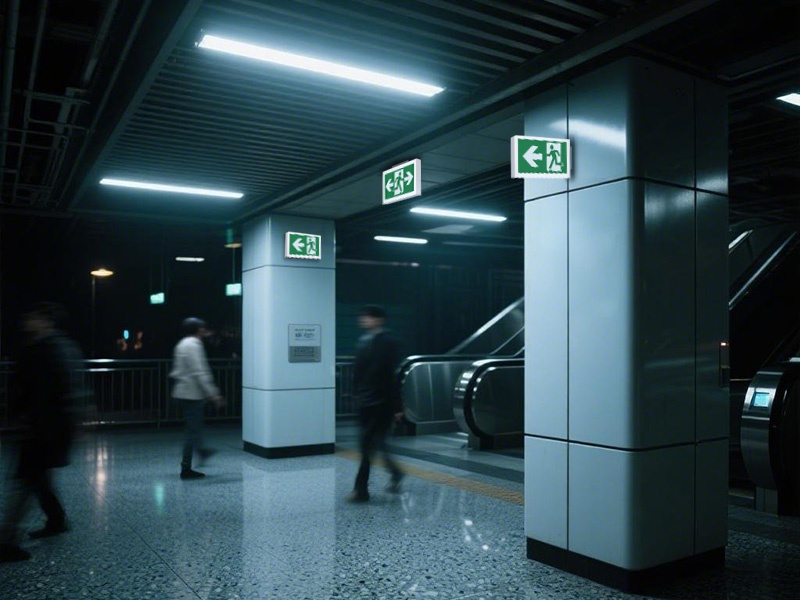
Subway station: As a place with a high concentration of people and significant mobility, subway stations have extremely high requirements for safety and security. The application of intelligent emergency lighting systems in subway stations covers various areas such as platforms, passageways, and stairs. During normal operation, it can serve as a supplement to general lighting, providing auxiliary lighting. In the event of emergencies such as fires, earthquakes, or train malfunctions, the system immediately switches to emergency mode. Its intelligent control function can accurately guide passengers to evacuate to safe areas based on the location of the accident. At the same time, the system can also be linked with the subway's broadcasting system and monitoring system to promptly convey safety information to passengers and assist staff in emergency management.
Hospitals: Hospitals are special places dedicated to saving lives and healing the wounded. In emergency situations, the role of intelligent emergency lighting systems is particularly crucial. In important medical areas such as operating rooms and intensive care units, emergency lighting systems must ensure instantaneous activation with stable and flicker-free light to maintain the continuity of medical work and avoid secondary harm to patients caused by lighting interruptions. In public areas such as hospital corridors and wards, intelligent emergency lighting systems can intelligently adjust lighting brightness according to personnel distribution, guiding patients, family members, and medical staff to evacuate quickly, while providing a clear working environment for rescue personnel.
III. Industrial sites
Factory workshop: Factory workshops are typically equipped with numerous devices and have complex spaces, posing risks such as flammability and explosiveness. An intelligent emergency lighting system can quickly provide reliable illumination in the event of emergencies such as fires and explosions. By integrating with the fire protection system, the system can quickly locate the accident and activate emergency lighting in the corresponding area, while also indicating the direction to the emergency exit. Furthermore, for highly automated factory workshops, the intelligent emergency lighting system can also be integrated with the production equipment monitoring system. When equipment malfunctions leading to a power outage, the system can be activated promptly to provide lighting for maintenance personnel, facilitating their rapid investigation and fault rectification, thereby reducing production losses.
Warehouse: Warehouses store a large amount of supplies. In the event of an emergency, ensuring the safety of supplies and the evacuation of personnel are equally important. The intelligent emergency lighting system can reasonably set up lighting fixtures and evacuation indicators based on the layout of the warehouse and the storage of supplies. In the event of a fire, the system can not only guide personnel to evacuate but also indicate the location of fire-fighting equipment through special lighting modes, such as flashing lights or lights of specific colors, to help staff quickly access and use fire-fighting equipment for fire extinguishment. At the same time, for some special warehouses that store flammable and explosive materials, the intelligent emergency lighting system adopts explosion-proof design to ensure safe use in hazardous environments.
IV. Residential buildings
High-rise residential area: High-rise residential areas have a large number of residents, making evacuation challenging. Intelligent emergency lighting systems can provide effective evacuation guidance for residents in emergency situations. In the event of emergencies such as fires or elevator malfunctions, the system automatically activates, illuminating emergency lighting fixtures and evacuation signs in the corridors to guide residents to the escape routes. Some advanced intelligent emergency lighting systems can also be connected to the property management system of the community, allowing property management personnel to monitor the real-time operational status of the emergency lighting system through the monitoring platform, ensuring that the system functions properly in emergencies.
Villa and high-end residential buildings: For villas and high-end residential buildings, intelligent emergency lighting systems not only possess basic emergency functions but also can be integrated with smart home systems. Homeowners can remotely control and set up the emergency lighting system in their homes through mobile phone apps or smart control panels. For instance, when traveling, they can remotely check whether the emergency lighting system is functioning properly via their mobile phones; when returning home at night, they can turn on the emergency lighting fixtures at the entrance and in the hallway in advance through their mobile phones, providing convenience and enhancing a sense of security.
In summary, intelligent emergency lighting systems are widely used in various fields such as commercial buildings, public facilities, industrial sites, and residential buildings. Their application in different scenarios not only ensures the safe evacuation of personnel but also facilitates the rapid recovery of emergency rescue, production, and daily life. They are an indispensable and crucial component of the modern safety and security system.
LATEST NEWS
Get A Quote
If you are looking for more information on our services, or how we could potentially help, we would love to hear from you!
File Download
Fill out the form to view and download files.